
Listen2Baby research study and toolkit
Sands have been supporting the Listen2Baby study at the University of Oxford, which focusses on making sure that monitoring a baby's heart rate using a technique called 'Intermittent auscultation' (IA) is done safely and effectively during low-risk pregnancies.
The project aimed to find out how IA heart rate monitoring is done in the UK, reviewing the training given to midwives, and identifying ways to improve heart rate monitoring during straightforward pregnancies. Building on the findings of this research, the Listen2Baby Toolkit has been produced which will help healthcare staff and organisations check how well they are currently doing IA heart rate monitoring and provide advice on where improvements can be made to ensure the safest possible care is being given.
Monitoring the baby's heart rate during labour is one of the main tools midwives have to know if something might be going wrong. However, recent studies and enquiries have found that monitoring is not always carried out properly, leading to avoidable deaths and harm to babies.
The Listen2Baby toolkit produced from the research is available on the Listen2Baby website and can be accessed for free. It was developed in partnership with maternity staff and women, and is endorsed by the Royal College of Midwives and the Royal College of Obstetricians and Gynaecologists. The toolkit has been evaluated at pilot NHS Trust sites from September 2025 and as of May 2026 it is in the process of being implemented nationally. Sands helped ensure bereaved families’ experiences were included in the research and development of the toolkit.
More information
Why is this important?
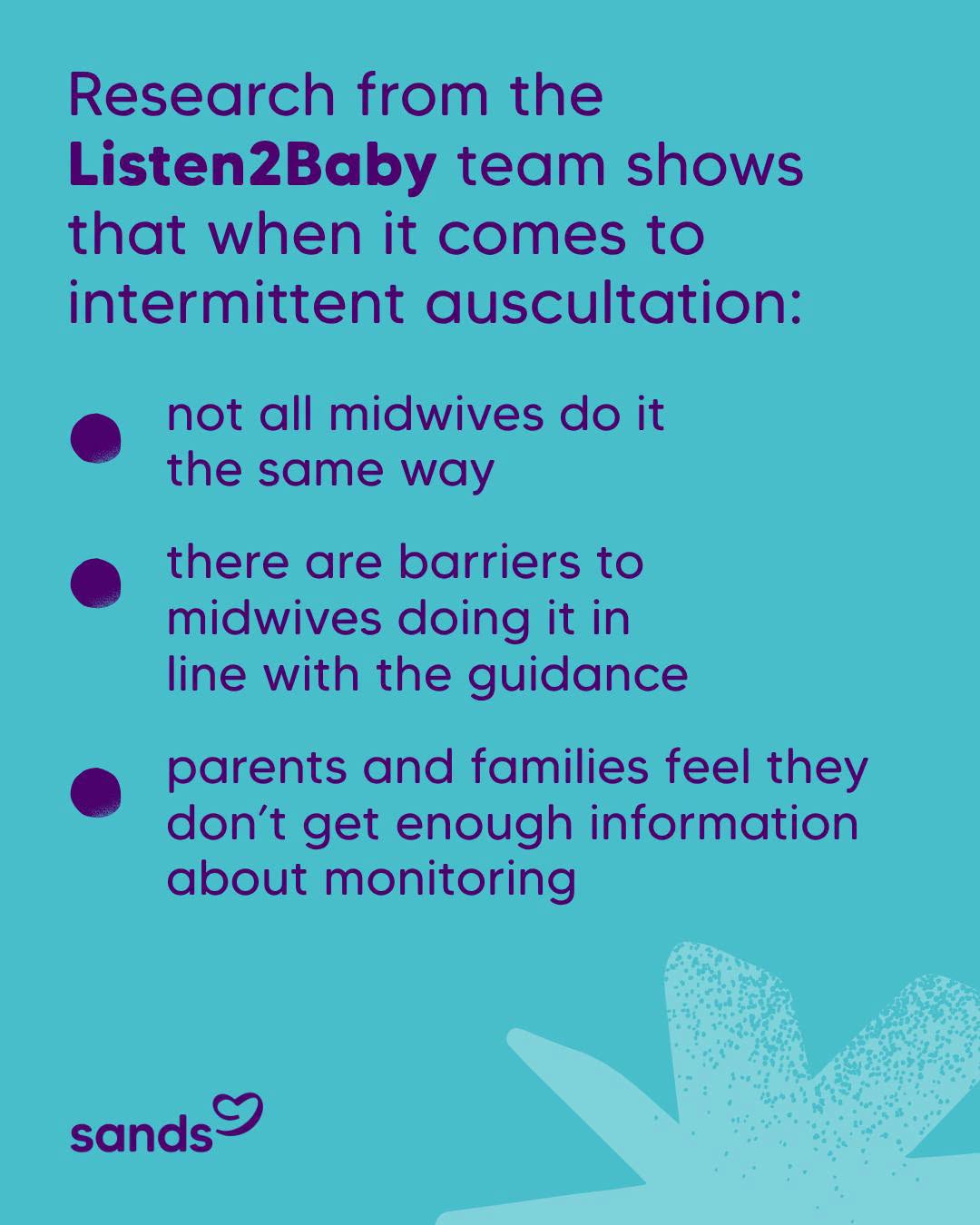
Numerous reports and enquiries, including the ESMiE confidential enquiry, identified that monitoring the baby's heart rate in low-risk pregnancies using intermittent auscultation was not always being in done in line with guidance, leading to problems that caused severe harm or death for some babies. Midwives had reported feeling that intermittent auscultation was undervalued as a skill and that there were less opportunities to develop and maintain skills, while women also felt unaware of all the options available for fetal heart rate monitoring. The Listen2Baby research sought to fill the evidence gaps around IA clinical practice and skills, and highlight where these could be addressed using the Listen2Baby toolkit.
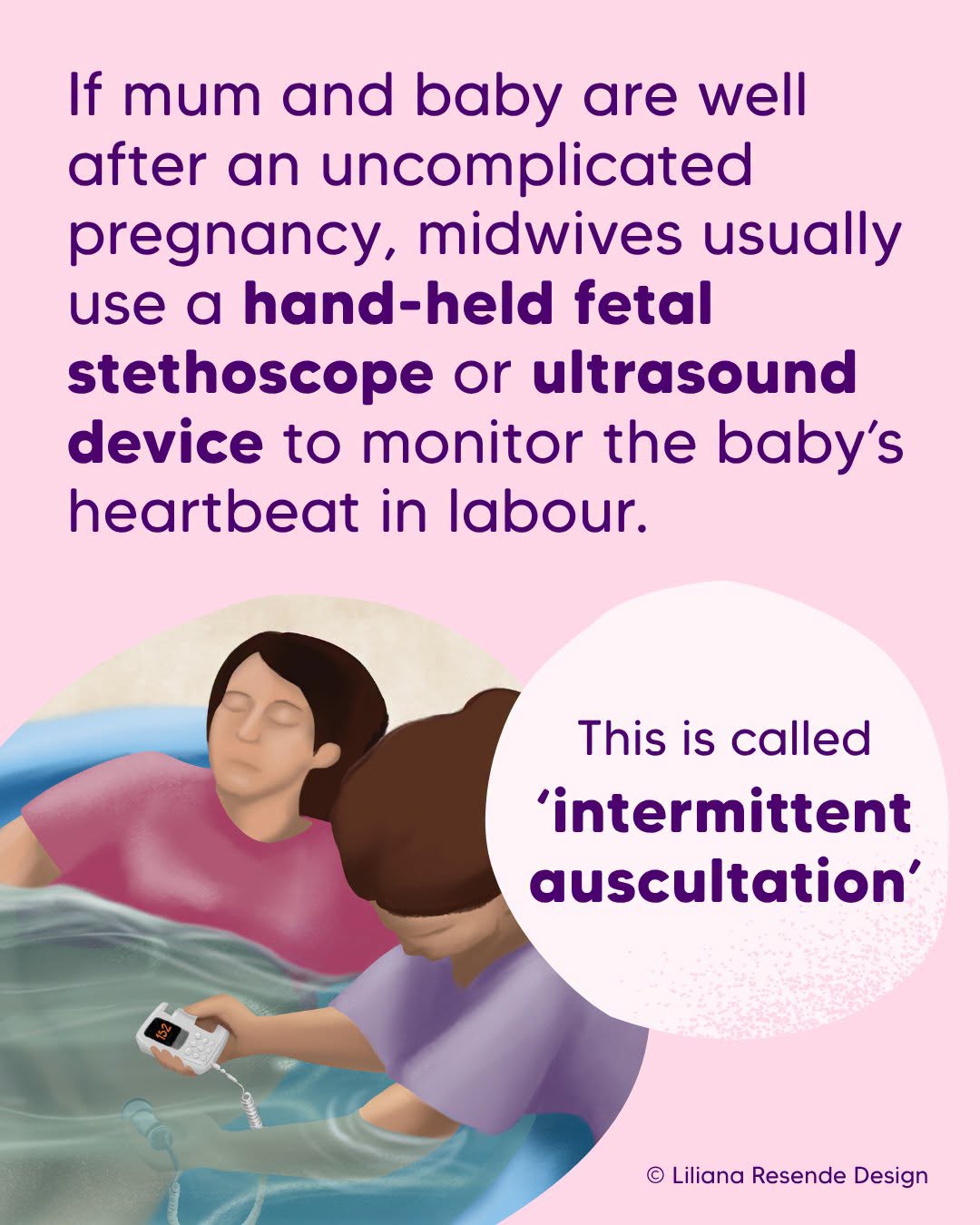
Illustration of intermittent auscultation by Liliana Resende Design, courtesy of Listen2Baby project.
How was the research carried out?
The team surveyed NHS maternity organisations, interviewed midwives, observed their practice and audited case notes to build up a clear picture of how IA was being done in practice and why. They also interviewed women who had experienced IA monitoring during labour to understand their experiences too. This work led to a co-design event with all stakeholders to guide the development of the final toolkit, which was then launched and evaluated in seven NHS Trusts before being fully rolled out in these Trusts between September 2025 and April 2026, with analysis of the rollout ongoing.
How did Sands support the research?
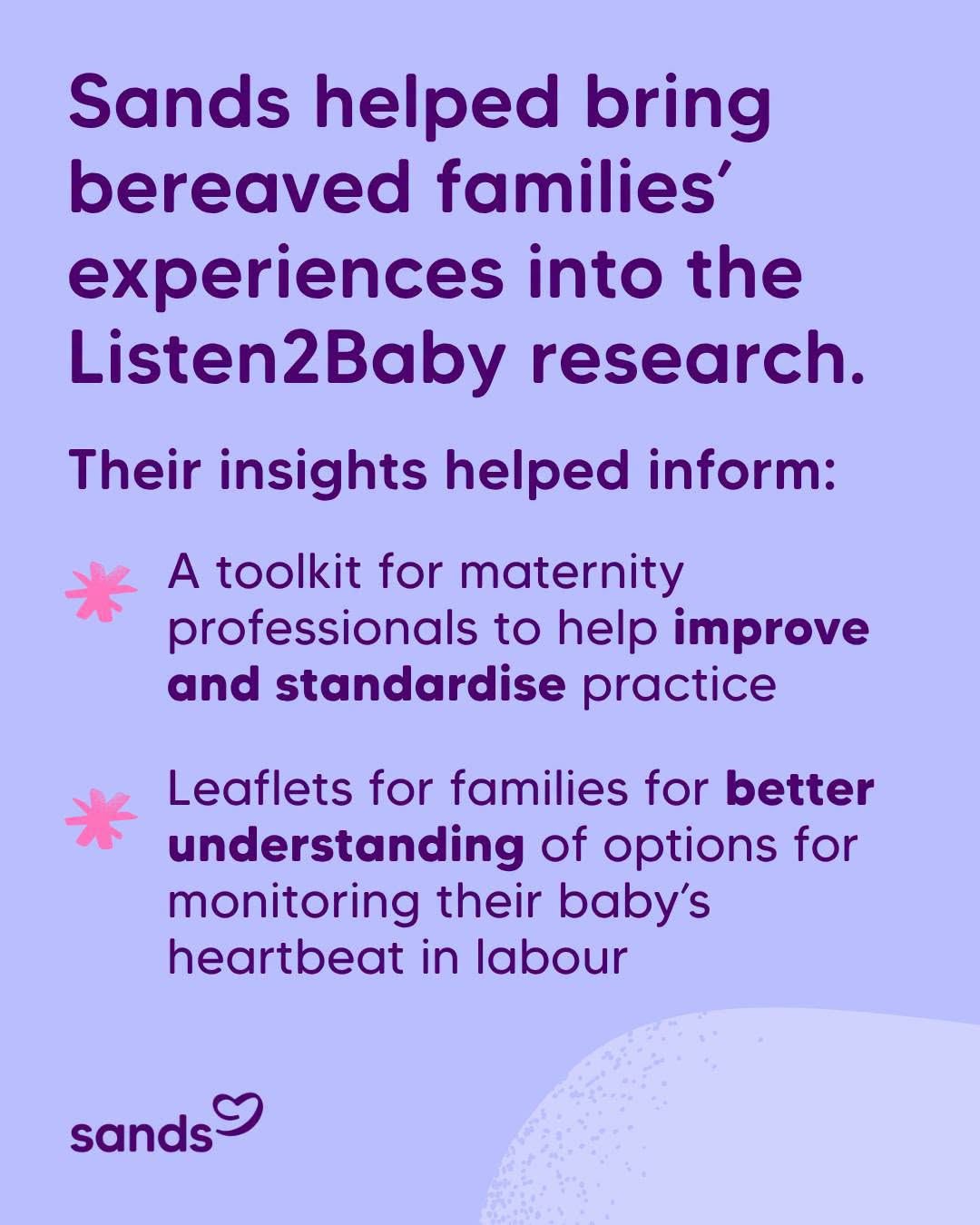
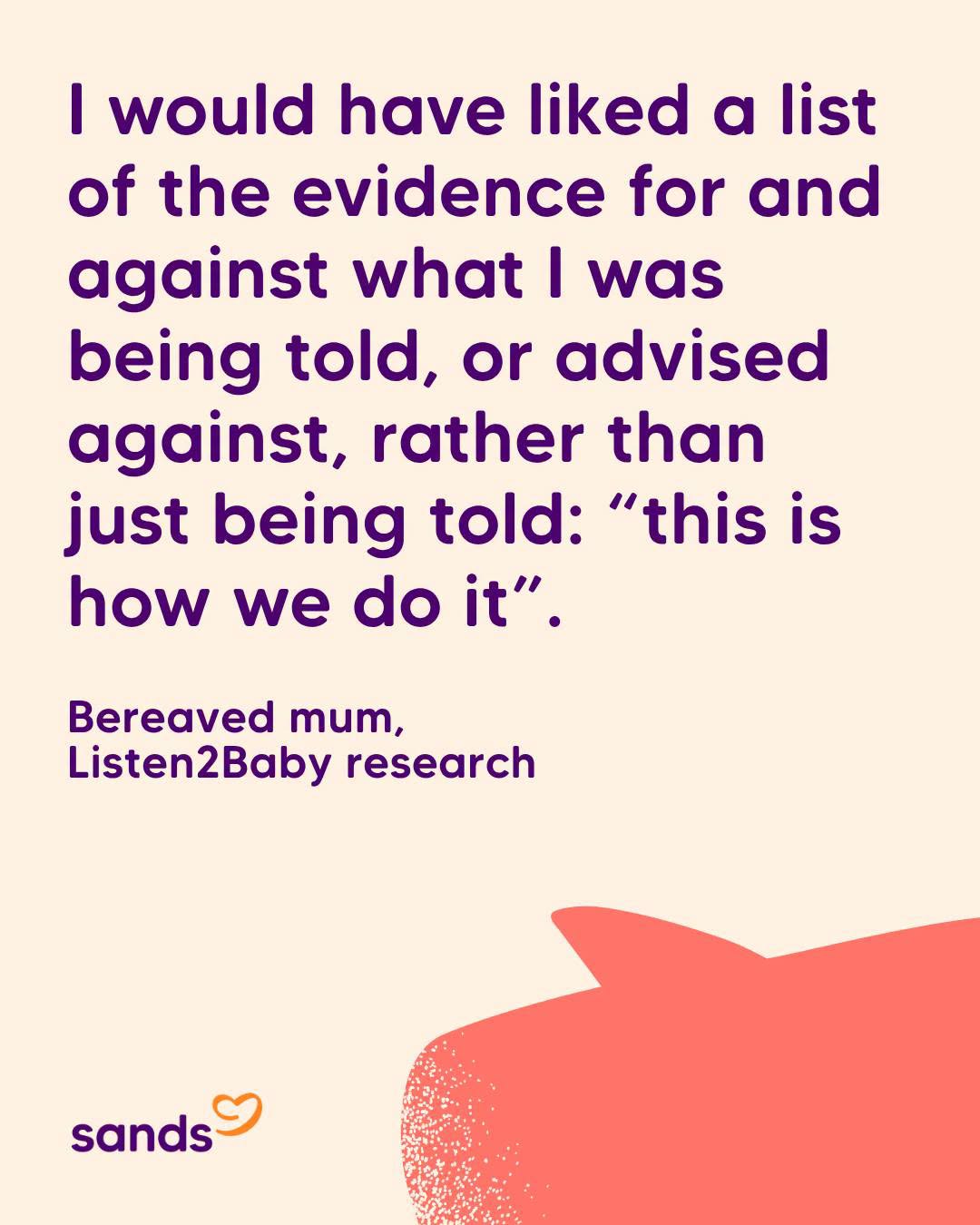
Sands helped ensure bereaved families’ experiences were included in the research. Their valuable insights helped inform an online toolkit for maternity professionals to help improve and standardise practice. Leaflets have also been created to help families understand more about their options when it comes to monitoring their baby’s heartbeat during labour.
What was the impact of the research?
The Listen2Baby Toolkit is now at the stage of being implemented nationally and is already available to Trusts and maternity staff for free on the Listen2Baby Toolkit website. The research team are continuing to evaluate its use in the seven Trusts where it is fully rolled out, and the toolkit has already been endorsed by the Royal College of Midwives and the Royal College of Obstetricians and Gynaecologists.
Publications: