Catherine shares how when she and her husband Carl started trying for a baby they received a male factor infertility diagnosis that landed heavily for Carl. The couple discovered that a form of IVF called ICSI, where they inject a single sperm directly into the egg, would be their only hope of conceiving. Catherine shares how sadly their first IVF attempt failed, and how no one really talks about embryo loss, but it’s a very real and painful kind of grief. She shares how their second round of IVF ended in a positive test but that following an eight week early scan a doctor confirmed that there was sadly no heartbeat, and that she had had a missed miscarriage. She recalls walking out of the hospital to bright sunshine and feeling angry that it was such a beautiful day. The couple knew they wanted to try again quite quickly, so they started their third round of IVF which resulted in another positive pregnancy test. Catherine felt terrified this too would be taken away but as the weeks went by she reached more pregnancy milestones, and in May 2026 her baby boy Otis was born.
Please be aware that Catherine has chosen to share a picture of baby Otis with her story.
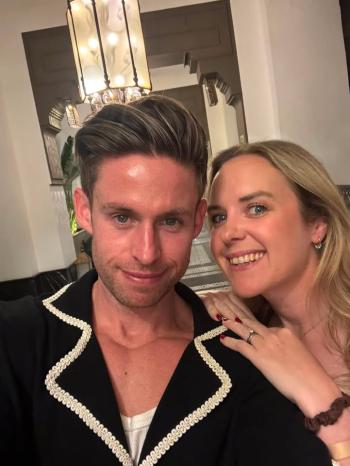
I’m Catherine, and my husband Carl and I started trying for a baby in 2023. We had been together for eight years, married for five years, and we always assumed children were in our future, at a time of our choosing.
The months passed, and we sought testing. We then found ourselves flung into the world of fertility treatment and had blood tests, a semen analysis and a hycosy (a scan test to check my uterus and fallopian tubes). All of my tests came back clear. We never expected a male factor problem, as Carl is incredibly healthy - a personal trainer (PT) by trade and the kind of man who blitzes oats for breakfast and makes a 5k look like a walk in the park. But then the call from our GP came, and the voice at the end of the line said, ‘your results are a little low in all areas’. We were confused, and requested a print out so we could try and google the results. It turned out Carl’s sperm was very low in count, motility and morphology, and from there I knew from my own research that a form of IVF called ICSI (where they inject a single sperm directly into the egg) would be our only hope of conceiving.
For Carl the realisation landed heavily. Anger, confusion, grief: a diagnosis like this can really shake a man’s identity, and it’s so rarely spoken about. He actually turned to me and told me I could find someone else if I wanted who could give me a baby, which broke my heart. Of course, this would never be a reality, but these are the dark thoughts that creep in for so many men dealing silently with a male factor infertility diagnosis.
We began our first round of IVF in January 2025, full of hope and maybe some naive optimism.
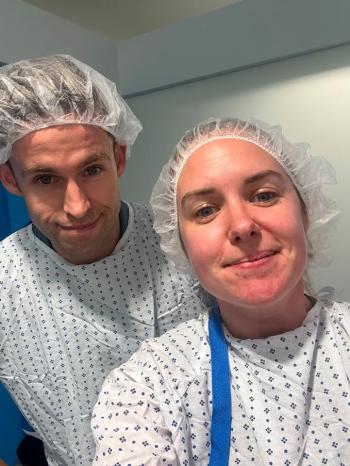
I went through the injections, internal transvaginal scans every other day to track my follicles progress and finally the egg collection procedure, all in the hope of getting as many eggs as possible. On the day of transfer, we had one embryo ready to transfer back to my womb and three ready to freeze. An anxious two week wait followed and then we took a test - sadly it was negative and our first attempt had failed. No one really talks about embryo loss, but it’s a very real and painful kind of grief. Embryos are precious and incredibly hard to make, and each one of them represents a hope of a little human. It’s a disenfranchised grief that others don’t recognise - they tell you ‘better luck next time’ and ‘at least you have more frozen’, but you are left mourning this particular hope.
We picked ourselves up, and after a couple of months (the hormone crash is no joke!) we felt ready to try again. This time a frozen transfer, where they would thaw one of our embryos on ice and transfer it back. This time, our two week wait ended in a positive test. I will never forget picking up the test and seeing two pink lines and a rush of emotion just pouring out of me. Relief - it had taken two years, but we finally did it. We even had an early scan at our fertility clinic at six weeks which showed perfect growth and a strong heartbeat.
We were fairly anxious as many IVF patients are, so we booked another private scan at eight weeks just to reassure ourselves. Our hearts sank as the sonographer told us our baby was only measuring around six weeks. A very faint heartbeat could be detected but it wasn’t promising. We rushed to A&E and then the next day to our local Early Pregnancy Unit (EPU), where a doctor confirmed that sadly there was no heartbeat, and that this was a missed miscarriage. Somewhere in that 12 hours between the two scans, the heart had stopped, and a part of me feels like maybe this little one was hanging on just long enough to say goodbye to us.
We walked out of the hospital to bright sunshine, clutching leaflets on what to expect next. I felt angry that it was such a beautiful day, that everyone was going about their business and no one else had a care in the world. Didn’t they realise our world had fallen apart? It felt like so much to lose considering all we went through to get there. All miscarriages are horrendous, but there’s a particular cruelty with losses after IVF. It had taken us years to even achieve a pregnancy, and we have to do so much more for just a chance, and trying again for us meant appointments, scans, medication, hormones, invasive procedures. IVF consumes every part of your life and there was no area of ours that was left untouched. Carl also felt a huge guilt because his male factor diagnosis had led us to struggle in the first place - I remember he sat in the car and sobbed, and told me, “this is all because of me”. My heart broke a little more when I thought it was already in a million pieces.
We knew we wanted to try again quite quickly. For me, the aching hole I felt would only really be healed by a baby, and that meant plunging once again into IVF.
I was ready and had my armour on. We opted for another egg collection to try and bank more embryos whilst I was still as young as possible as younger eggs have a better success rate, so cue the injections and hormones once more! I felt as if all the colour was being drained from me as each hormone took hold - I felt fatigued, bloated, emotional, not to mention exhausted from having to go through more treatment. But all in the hope that this time might be different.
On transfer day this time, we had just one embryo to put back in my womb. The little embryo that could, our third transfer resulted in another positive test. This time no rush of joy or outpouring of happy tears. We were grateful and relieved of course, but I simply looked at the stick and said ‘there are two lines’. We Whatsapped a picture to our families (no cute announcements here) and just felt terrified that this would also be taken away from us.
But the weeks went by, and we reached more pregnancy milestones. We had about 10 scans all in all, some NHS but most of them private, usually met with tears of relief to hear everything was shaping up as it should.
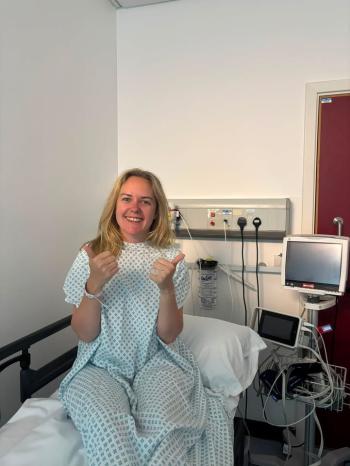
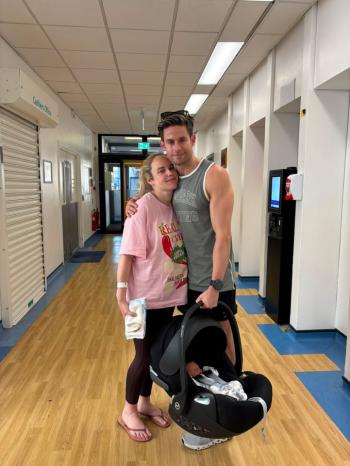
Finally, our baby boy Otis was born in May 2026 by emergency c-section. Meeting him was everything we had been hoping and waiting for.
Carl and I just kept saying to each other ‘we did it!’ And ‘it’s taken so long’. Finally, we were bringing home our baby.
In the depths of infertility and the uncertainty it brings, I would lie awake at 3am and spiral, worrying that this life as a parent would never be for me. IVF brings no guarantees and not everyone walks away with a baby, so to be the lucky ones is just magic. We will forever be grateful for this incredible science, and the little sticky embryo that went all the way and made us mum and dad.